I Took Retatrutide Every 3 Days Instead of Once a Week for 10 Months. Here's What It Did, and What It Didn't.
I started retatrutide once a week and ended up splitting it every 3 days, chasing the day my appetite came back. Here's what the half-life says, what splitting actually changes, what nobody has tested, and why I just stopped.
By Jason Jeffries · October 5, 2026
I started retatrutide on November 28, 2025. Once a week, 0.5 mg. I took my last dose this past Saturday, October 3rd. In between, I went from once a week, to every 4 days, to every 3 days.
I never had a plan to split it. I was just paying attention to one thing: the day my appetite came back.
The day my appetite came back
When I started, the appetite suppression lasted until day 5 or 6 after a shot. Then that number slowly dropped. So I did what most people do. I raised the dose, up to 1.5 mg once a week, around month two or three.
That’s when the side effects showed up. Not nausea. I never really got nausea, maybe a little from food sitting in my stomach longer. What I got was worse sleep and a higher heart rate, and I could see both on my WHOOP.
So around month three I tried something different. Instead of a bigger shot once a week, I took 1 mg every 4 days. My rule was simple: dose the day before my appetite came back.
My sleep got better. To be fair, I also started taking magnesium around the same time, so I can’t give the split all the credit for that. My heart rate leveled off.
Then I tightened it to 1 mg every 3 days. In early March I moved to 1.5 mg every 3 days. On May 3rd I went to 2 mg every 3 days, and that’s where I stayed.
Here’s the whole thing laid out, with the weekly total next to each step, because that number matters later:
- Nov 28, 2025: 0.5 mg once a week (0.5 mg/week)
- Month 2 to 3: 1.5 mg once a week (1.5 mg/week). Sleep got worse, heart rate went up.
- About month 3: 1 mg every 4 days (about 1.75 mg/week)
- After that: 1 mg every 3 days (about 2.33 mg/week)
- Early March 2026: 1.5 mg every 3 days (3.5 mg/week)
- May 3, 2026: 2 mg every 3 days (about 4.67 mg/week)
- October 3, 2026: last dose
Notice the switch to every 4 days actually raised my weekly total a little, from 1.5 to about 1.75 mg, and my side effects still got better. That’s the part that made me think the size of each shot mattered more than the total.
What the half-life says
In the early human study, retatrutide’s half-life was about 6 days, and it was dosed once a week. That trial was in adults with type 2 diabetes. The big phase 2 obesity trial, 338 adults over 48 weeks, also dosed it once a week.
With a 6 day half-life, you get close to a steady level after about 4 to 5 half-lives. That’s roughly 3.5 to 4 weeks on the same dose.
What splitting actually changes
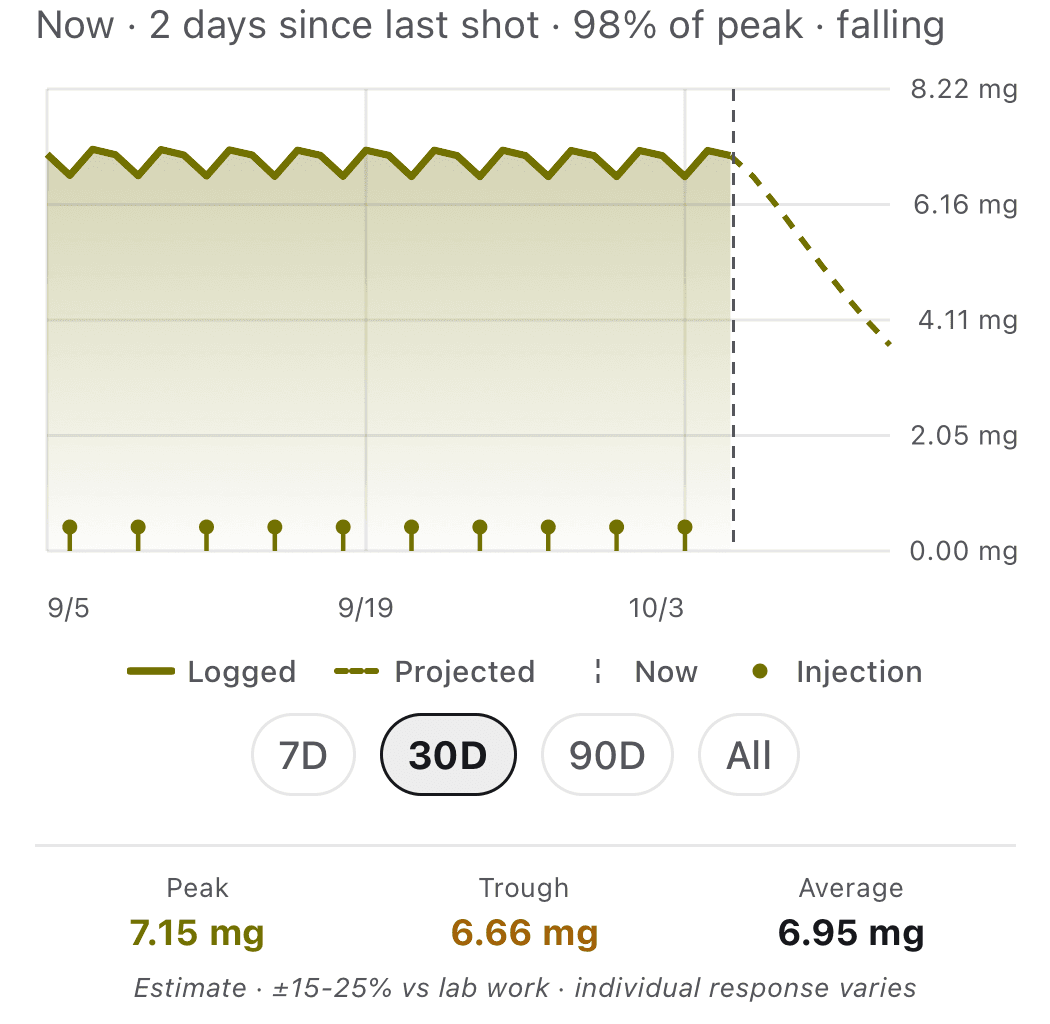
I used the blood level chart in Frontload to understand the timing. It can’t tell you how you’ll feel. What it shows is the shape of the curve.
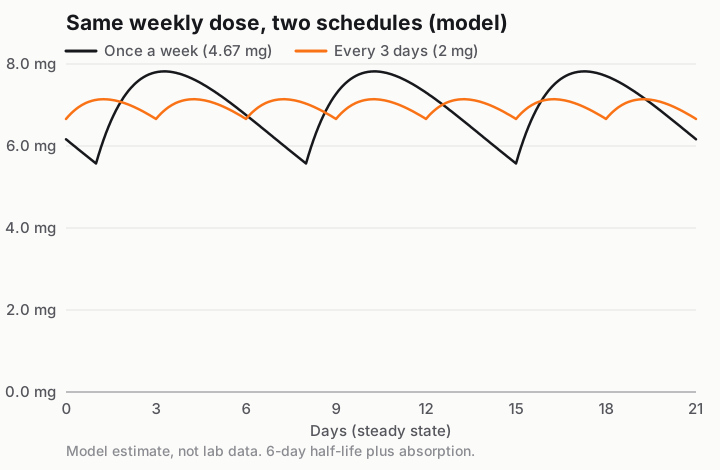
Here’s what the app’s model says, the same one that draws my chart. It uses the 6 day half-life plus the time it takes the shot to absorb. Same weekly total of 4.67 mg either way:
- Once a week: a higher peak right after the shot and a lower dip before the next one.
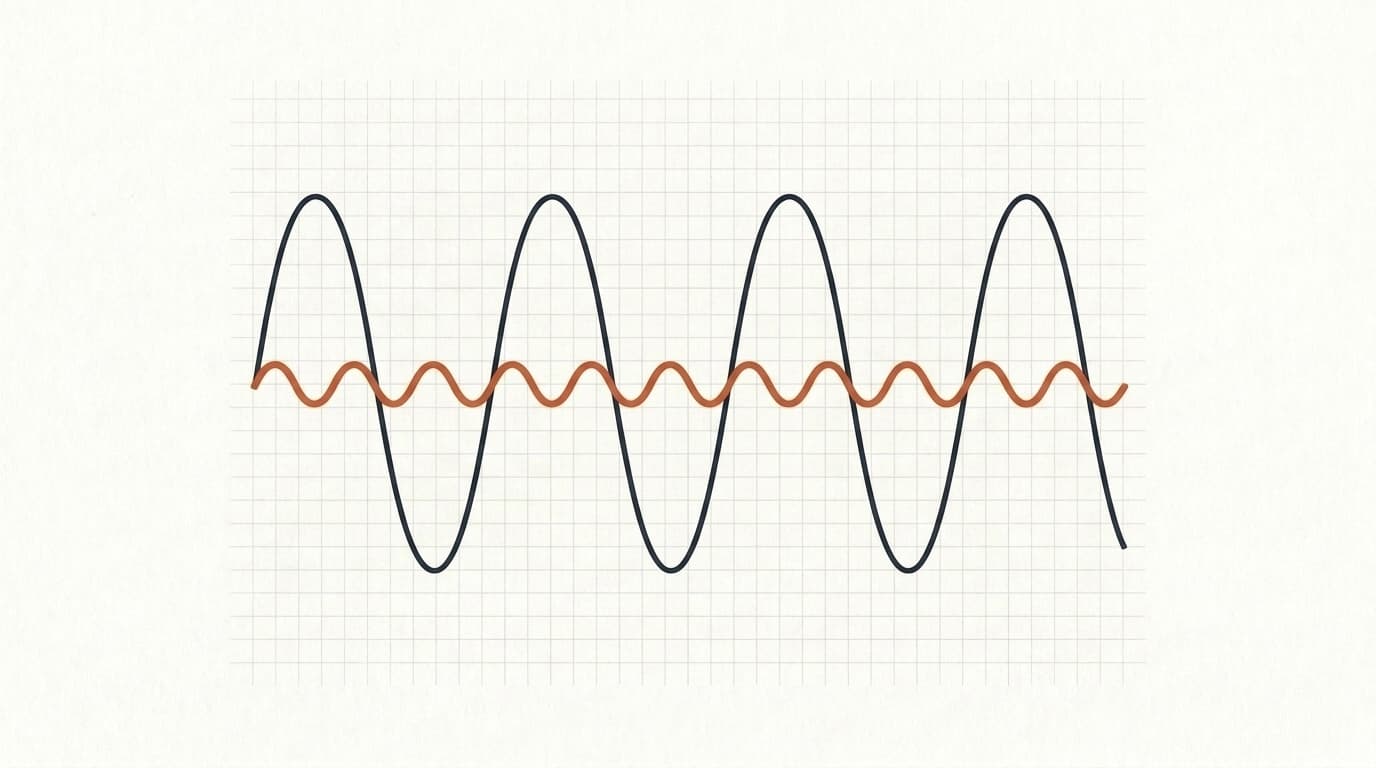
- Every 3 days: about a 9% lower peak and about a 20% higher low point.
- Average level: exactly the same either way.
That last line is the important one. Splitting doesn’t give you more drug. It gives you the same drug in a flatter line. And the difference is smaller than I expected, because a once-a-week shot already absorbs slowly and smooths itself out. This is a model, not a blood test, so treat the exact numbers as rough.
What nobody has tested
Every trial I could find dosed retatrutide once a week. I couldn’t find a single study, for retatrutide or any of the weekly GLP-1 drugs, that compared splitting the same weekly dose against taking it all at once.
So here’s what’s actually known, and what isn’t:
- Known: in the phase 2 trial, side effects showed up mostly while the dose was going up. Starting lower, at 2 mg instead of 4, cut them down.
- Known: slower dose increases are easier to tolerate. That’s been shown with tirzepatide too.
- Not known: whether a lower peak is what causes fewer side effects, instead of a lower dose overall.
- Not known: whether splitting gives you better results. Nobody has tested it.
My better sleep and steadier heart rate after splitting are one person’s experience, and the magnesium muddies it. I’m not going to tell you splitting works. I can tell you what I noticed.
What happened over time
My appetite kept coming back sooner, even after I split the dose. By the last stretch, at 2 mg every 3 days, the food sitting in my stomach feeling was gone. Over the last month I felt no appetite suppression at all.
There’s a small study that might explain part of that, though it isn’t about retatrutide. In 9 healthy people given GLP-1 through an IV, the slowing of stomach emptying faded quickly with repeated exposure. The researchers called it tachyphylaxis, which just means the effect wears off as your body gets used to it.
Here’s the uncomfortable part. A flatter, steadier level is exactly what splitting gives you. So it’s possible that splitting traded fewer side effects for an effect that faded faster. I can’t prove that. It’s a question worth asking, not an answer.
Why I stopped
I always planned to take a break in November. Saturday I finished off a vial, didn’t feel like reconstituting another one, and I wasn’t feeling anything from it anyway. So I stopped a month early.
Retatrutide isn’t FDA approved. Lilly has said it plans to file for approval in early 2027.
What I’d do next time
If I start again, I’ll probably go back to every 3 days, but I’ll start at 1 mg instead of working up from a big once-a-week shot. Start lower and go slower is the one part of this the trials actually support.
This is my experience, not medical advice. If you’re thinking about any of this, talk to your doctor.
Frequently asked questions
What is retatrutide's half-life?
About 6 days, measured in an early human study where it was dosed once a week.
Does splitting retatrutide into every-3-day doses reduce side effects?
Nobody has tested it. In a model, splitting lowers the peak a little and keeps the average the same. In the trials, side effects showed up mostly while the dose was going up, and starting lower helped. Whether a lower peak by itself means fewer side effects hasn't been studied.
Is 2 mg every 3 days the same as about 4.67 mg a week?
Yes. 2 mg times 7 days divided by 3 is about 4.67 mg a week. In the phase 2 trial, the weekly doses were 1, 4, 8, and 12 mg.
Why does retatrutide stop working for appetite?
Nobody knows for sure. One small study found the GLP-1 slowing of stomach emptying fades quickly with repeated exposure. That was native GLP-1 given by IV, not retatrutide, so it's a possible explanation, not a proven one.
Is retatrutide FDA approved?
No. Lilly has said it plans to file for FDA approval in early 2027.

Written by
Jason Jeffries
Founder of Frontload. Data analytics by day (12 yrs), training for 20, juggling a full-time job, family, and app development. I run TRT and peptides myself, and I built Frontload because my whole tracking system was a notebook in a drawer in my bathroom. I’m not a doctor and none of this is medical advice.
FRONTLOAD
Track it instead of guessing.
Doses, bloodwork, and an AI coach grounded in your own data. Free to start, on the App Store and Google Play.