The Scale Said I Gained 7 Pounds on TRT. My Progress Photos Showed Something Else.
I started TRT at 207 pounds and was 214 two months later. It was not muscle. The scale could not tell me what changed, but my progress photos could. Here is what that weight probably was, the ways photos lie too, and how to take ones you can actually compare.
By Jason Jeffries · October 4, 2026
I started taking progress photos about three years ago, when I decided I wanted to lose weight. The scale is one measurement. I wanted a visual one too.
For a long time the two told the same story. Then I started TRT, and they stopped agreeing.
The scale went up. My clothes fit better.
I started testosterone in March 2026 at 207 pounds. By May I was 214.
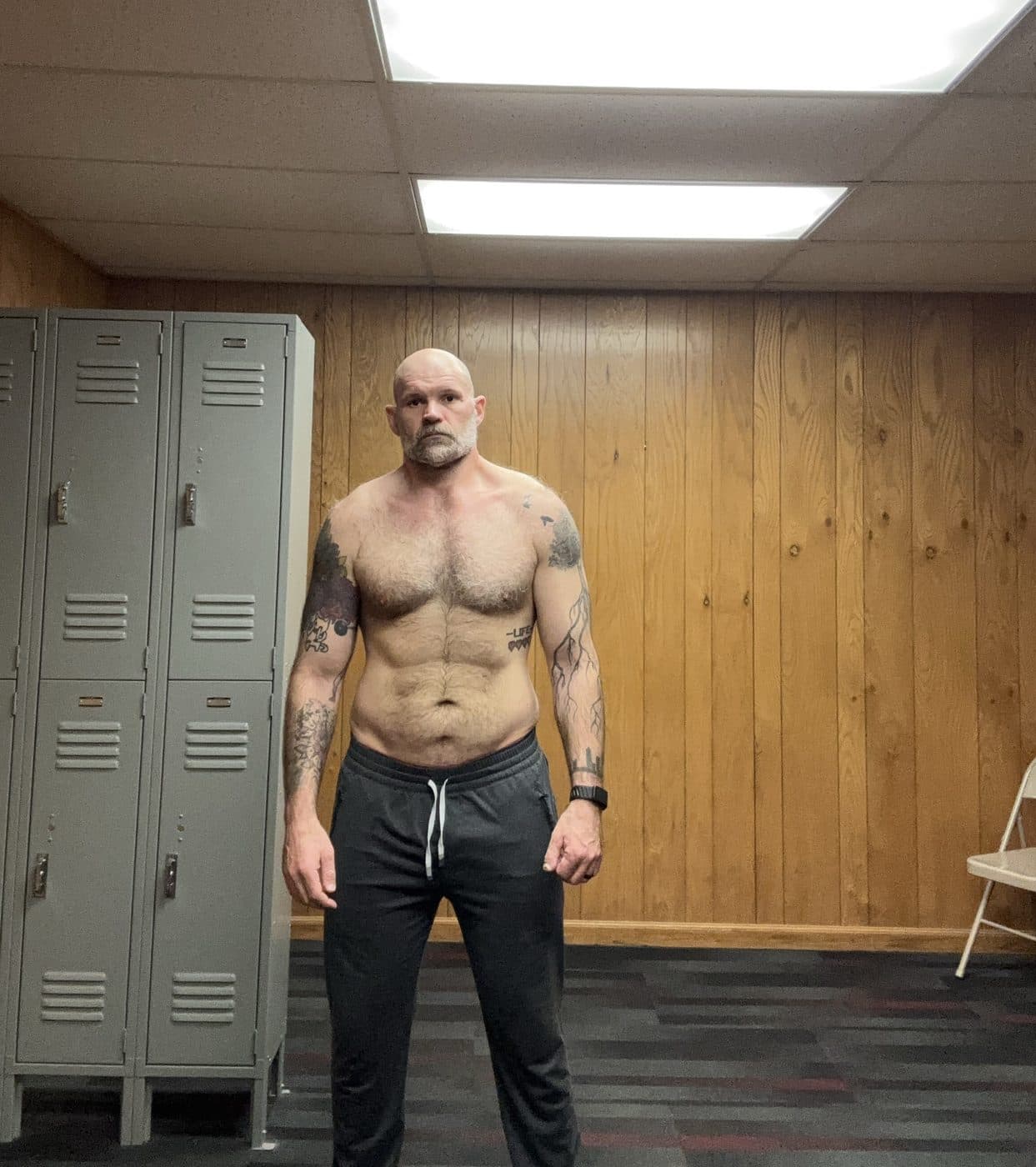
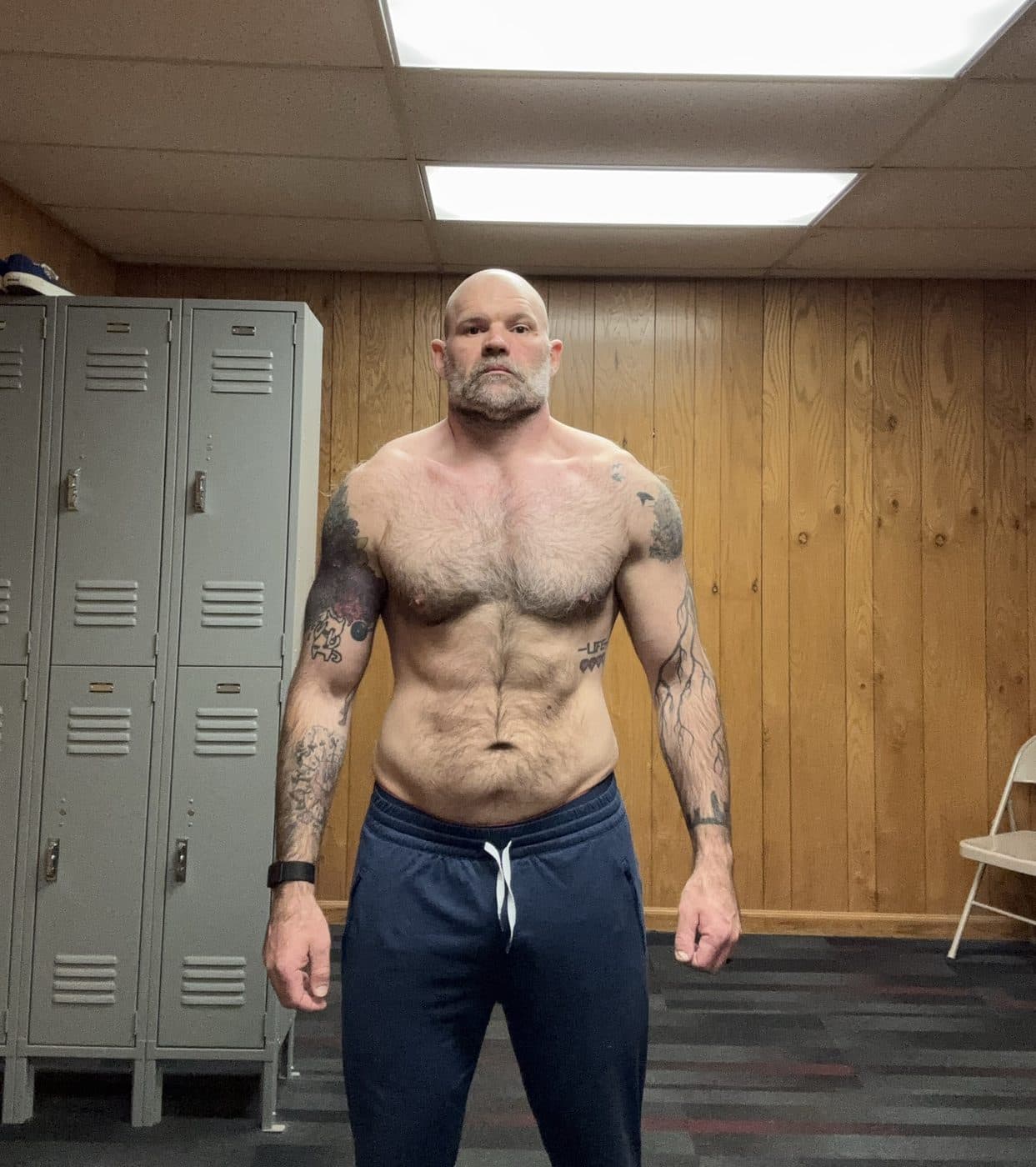
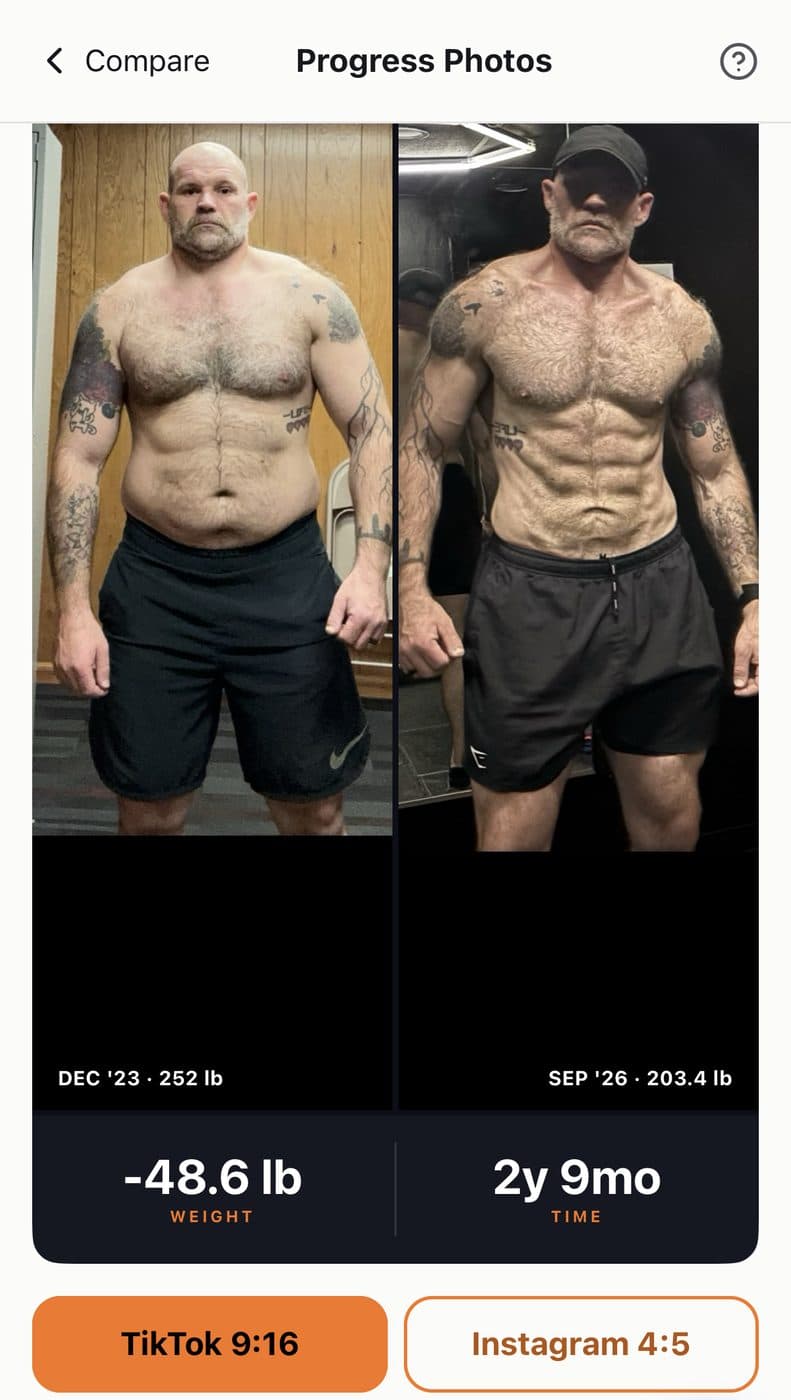
If all I had was the scale, that looks like I was going the wrong way. But my clothes fit better. In the photos my shoulders and arms looked bigger and more defined. My strength numbers all went up. In the photos, it looked like my body was recomping.
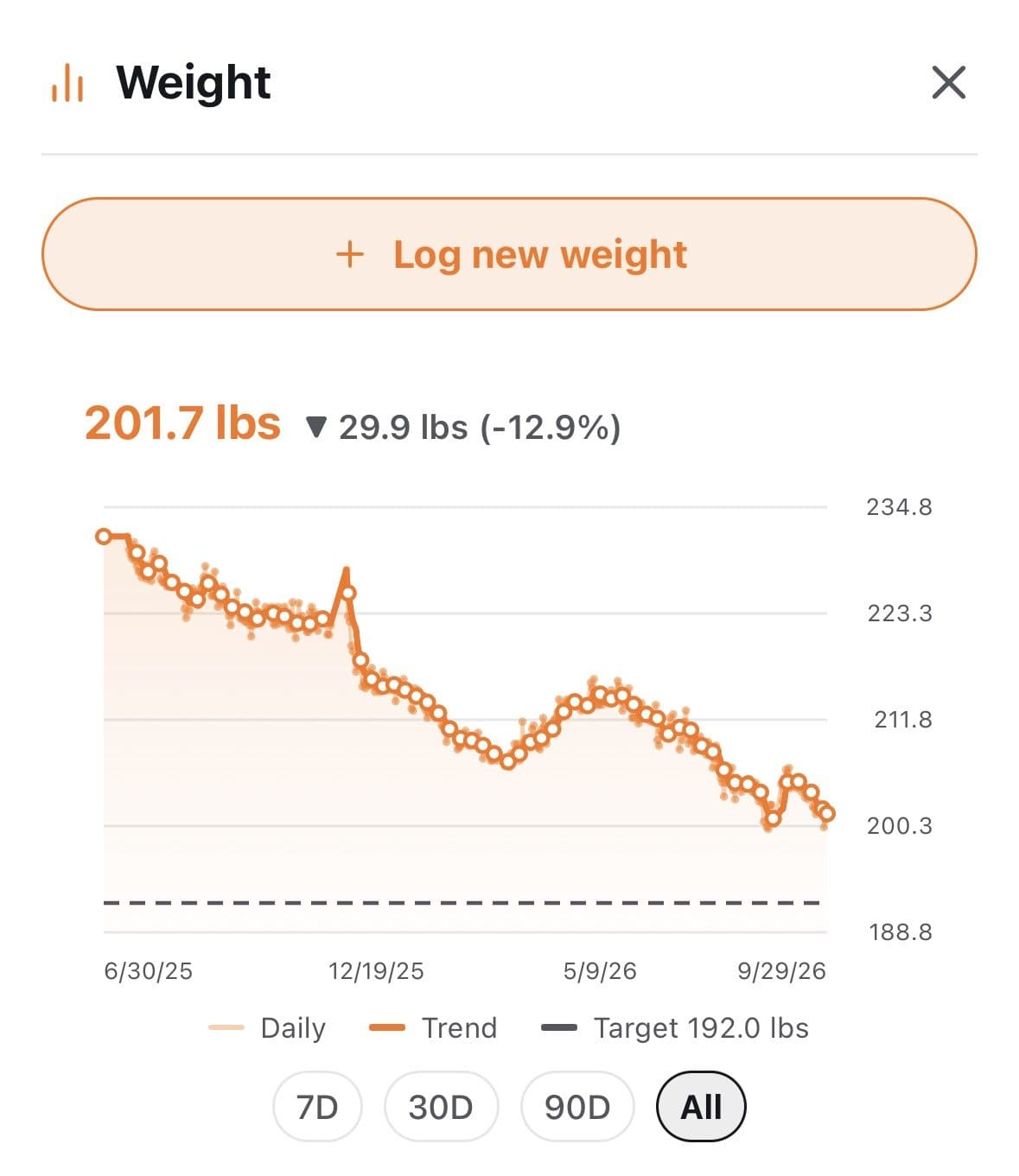
So what was the 7 pounds?
That wasn’t 7 pounds of muscle. You don’t put that on in two months on 150 mg a week. My read is most of it was water. The scale couldn’t tell the difference. The photos could show me something else: I went from looking flat and feeling weak to looking full and feeling strong.
Water retention on testosterone is not a gym myth. The FDA label for testosterone cypionate lists retention of sodium, chloride, and water among its effects. The oldest data on this goes back to 1938, when researchers gave testosterone to four men with very low levels and watched them gain roughly 3 to 4 pounds in the first ten days. They put it down to body water. That is a tiny, old study in men who were far more deficient than most people starting TRT today, so I would not treat it as a prediction. But it is the same pattern I saw: fast weight up front that has nothing to do with fat.
To be fair to the other side, replacement doses do build some real muscle, even early. In one study, seven men with low testosterone got 100 mg a week for ten weeks with no training at all, and MRI scans showed their triceps and quads actually got bigger. So I can’t say zero of my 7 pounds was muscle. Nobody can, not even a body scan, because a DEXA or similar test counts water as “lean mass.” What I can say is that it wasn’t 7 pounds of it.
The “flat versus full” part has a plausible explanation too. Your muscles store carbohydrate as glycogen, and glycogen holds water with it, roughly 3 grams of water for every gram stored. More stored glycogen and water in the muscle is a big part of looking full instead of flat. Whether that is exactly what happened to me, I don’t know. It is a reasonable guess, not a proven one.
What the scale can’t see
This is the whole reason I take photos. The scale gives you one number for everything at once: fat, muscle, water, glycogen, whatever you ate last night. It can’t tell you which one moved. A 7-pound gain that is mostly water and a 7-pound gain of fat read exactly the same on the scale. They look nothing alike in a photo.
Photos lie too
Here is the part I had to learn the hard way. Photos are only useful if you can compare them, and there are a few things that quietly wreck a comparison.
The pump. I take mine after I work out. That makes you look bigger, and it is not just in your head. In one ultrasound study, four sets of curls made people’s biceps measurably thicker, about 14 percent, and they were still thicker two days later. Those were people who didn’t normally train, so a regular lifter probably bounces back faster, but the point stands. A post-workout photo next to a rest-day photo is not a fair fight. Post-workout every time is fine. Mixing them is not.
Location. I used to take my photos at the gym, in the same spot, at least once a week. Then I started working out in my garage, so I couldn’t use the same spot anymore. Then I switched to a new gym, with different lighting, in a different spot. Every move changed the distance, the angle, and the background.

Lighting. This is the big one. My new gym has a posing room with amazing lighting, and it makes me look much leaner. I haven’t found a study on lighting and how lean a body looks, so this is just my experience, but it is not subtle. A posing-room photo next to a garage photo would make my progress look way better than it is. Good lighting doesn’t make you leaner. It just makes the photo say you are.
How to take progress photos you can actually compare
Consistency beats perfection. You don’t need great photos. You need photos that were taken the same way.
- Pick one timing and stick to it. Morning fasted or post-workout, it doesn’t matter which. Just don’t mix them.
- Same light, as much as you can. If you can’t, know which photos were taken in which light, and compare like with like.
- Same distance and height. The camera at the same height and the same distance every time, so you are the same size in the frame.
- Same poses, same order. Front, side, back is plenty.
- Once a week. More often than that and you are mostly photographing water and noise.
- Write down the conditions. Fasted, pumped, after a big meal, a different room. Future you will not remember.
- Compare over months, not days. One week to the next barely moves. Line up photos a month or two apart.
How I do it now
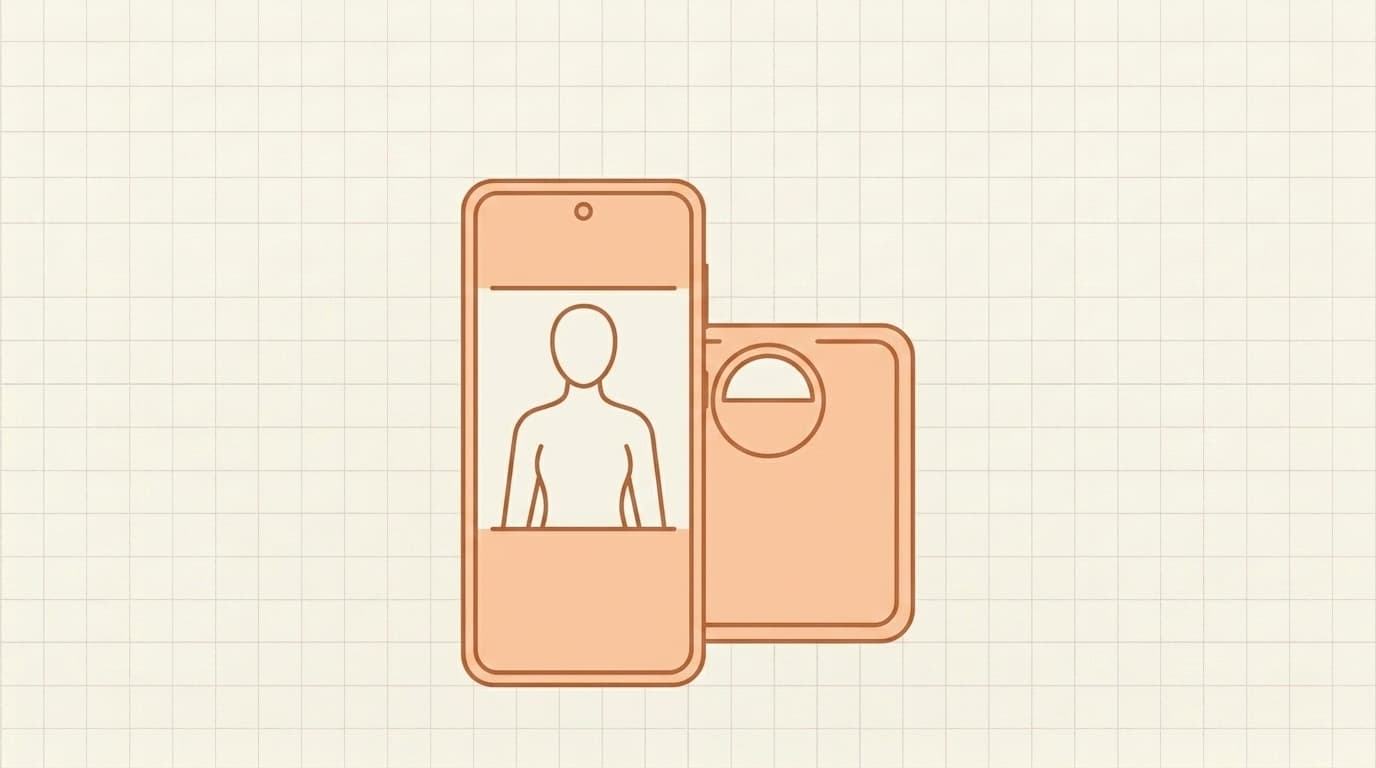
This is the problem I wanted to fix when I built progress photos into Frontload. My location kept changing, so I couldn’t rely on the same spot. The app puts two guide lines on the camera, one for your eyes and one for your hips, and it lines up my eye level across all of my photos. So even though I have shot them in three different places, I can still see a comparison over time.
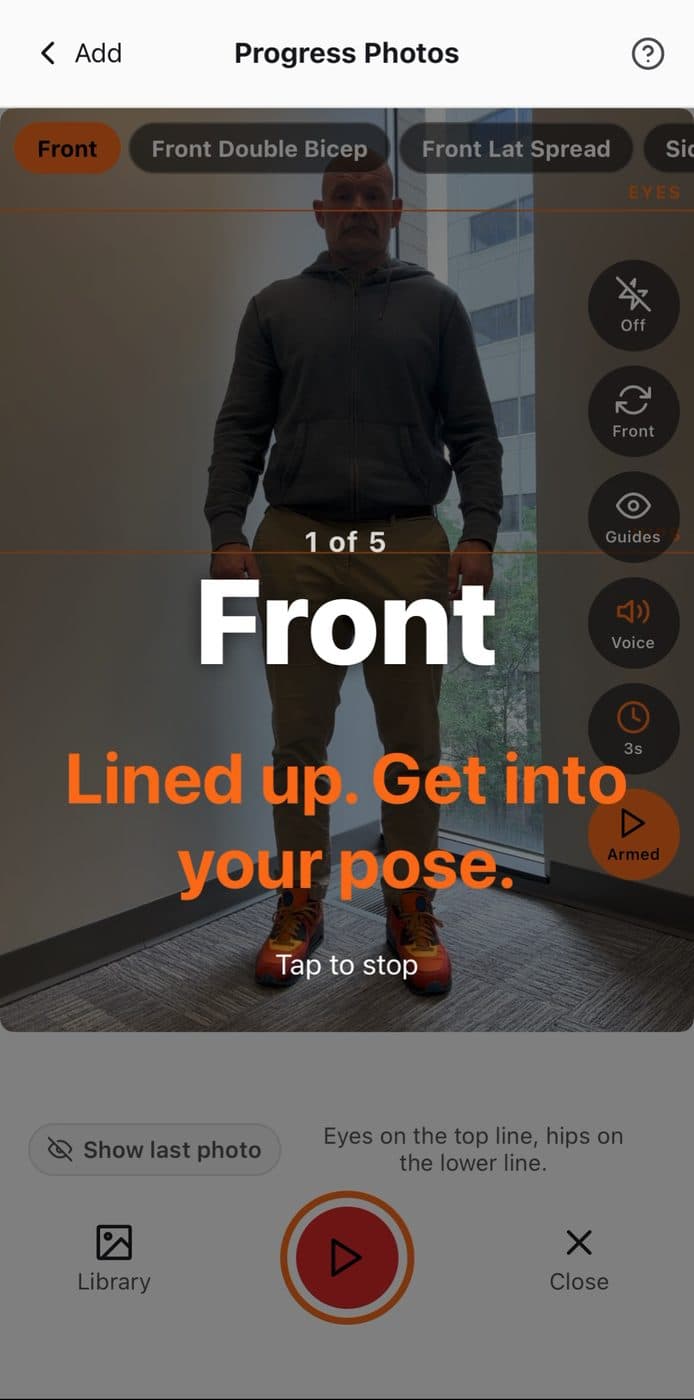
It won’t fix lighting. Alignment fixes position and size, not light. So I tag the conditions on each photo (post-workout pump, morning fasted, after a big meal, and so on), and when I compare two tagged photos with different conditions, the app points it out. The photos stay on your phone unless you choose to send one to the AI coach.
One honest caveat
Photos can mess with your head. Studies on body checking have found that looking yourself over in the mirror tends to leave people less satisfied with their bodies, not more, and that includes men. Those were short lab sessions, not weekly progress photos, but the lesson carries over. Take them once a week, compare them over months, and don’t sit there zooming in on every angle. If checking your photos starts making you feel worse, take fewer of them.
The bottom line
The scale said I gained 7 pounds. It was not muscle, and it probably was mostly water. The photos didn’t tell me exactly what the 7 pounds was either. What they showed me was the part the scale never could: I went from flat and weak to full and strong. Take them the same way every time, and they will tell you more than the number on the scale.
This is my experience, not medical advice. If you are starting TRT, work with your doctor and get your labs.
Frequently asked questions
Why did I gain weight when I started TRT?
Early weight gain on TRT is often largely water. Testosterone causes the body to retain sodium and water, and the FDA label for testosterone cypionate lists that as an effect. Replacement doses also build some muscle over time, but a fast gain in the first few weeks is unlikely to be mostly muscle.
How often should I take progress photos?
Once a week is plenty. More often than that mostly captures day-to-day water swings. Compare photos a month or two apart to see real change.
What time of day should I take progress photos?
It matters less than doing it the same way every time. Morning fasted or right after a workout both work. Just don't compare a fasted photo to a post-workout one.
Do post-workout photos make you look bigger?
Yes. A workout temporarily swells the muscles you trained. In one ultrasound study, biceps were about 14 percent thicker after four sets of curls and still thicker two days later. Post-workout photos are fine as long as all of them are post-workout.
Does lighting change how lean you look in photos?
In my experience, a lot. Strong lighting in a posing room makes me look much leaner than my garage does. Keep the lighting as consistent as you can, and only compare photos taken in the same light.

Written by
Jason Jeffries
Founder of Frontload. Data analytics by day (12 yrs), training for 20, juggling a full-time job, family, and app development. I run TRT and peptides myself, and I built Frontload because my whole tracking system was a notebook in a drawer in my bathroom. I’m not a doctor and none of this is medical advice.
FRONTLOAD
Track it instead of guessing.
Doses, bloodwork, and an AI coach grounded in your own data. Free to start, on the App Store and Google Play.