I Thought Nutrient Partitioning, Muscle Protein Synthesis, and Nitrogen Retention Were the Same Thing. They're Not.
On the podcasts, growth hormone "improves nutrient partitioning" and tren "boosts muscle protein synthesis." It all sounded like nitrogen retention to me. So I looked up what each one actually measures, and tested both claims against the research.
By Jason Jeffries · October 21, 2026
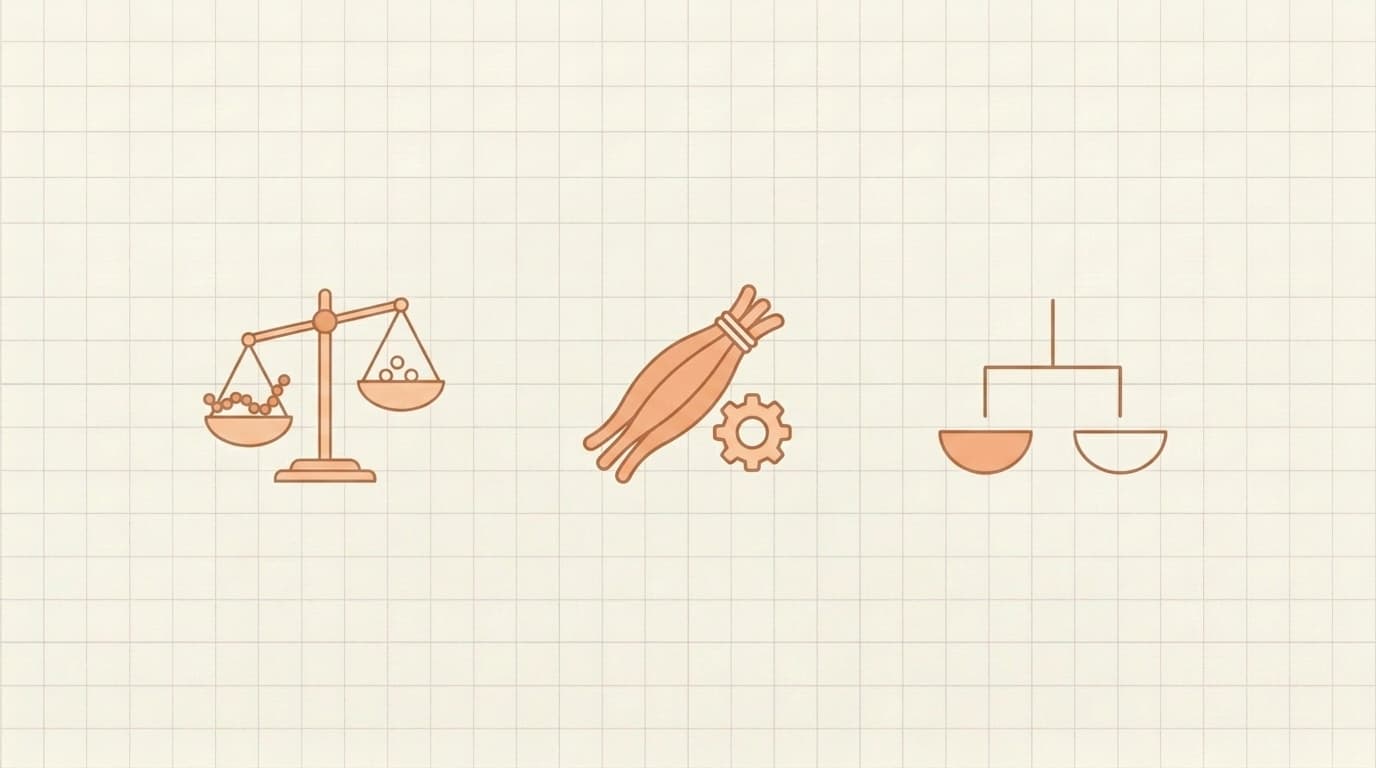
After I wrote about nitrogen retention, I started noticing two more terms everywhere. On the podcasts I listen to, people talk about compounds that “improve nutrient partitioning” and compounds that “boost muscle protein synthesis.” The two examples I hear most: growth hormone for partitioning, and tren for protein synthesis.
The more I listened, the more they sounded like nitrogen retention with a different name. Everyone says them in the same tone, about the same compounds, like they all mean “you build more muscle.”
So I had one question: are these three the same thing?
Short answer: no. They measure three different things, in three different places, over three different time frames. And once I understood the difference, both of those podcast claims looked a lot shakier than they sound.
The quick version
- Nitrogen retention is whole-body. It’s whether your body is keeping more protein than it’s losing, across every tissue you have.
- Muscle protein synthesis is one process in one tissue. It’s how fast your muscle is building new protein, measured over a few hours.
- Nutrient partitioning is about where the weight goes. When you gain or lose, it’s how much of that is lean tissue and how much is fat.
They’re related, but you can move one without moving the others.
What muscle protein synthesis actually is
Your muscle is always building new protein and breaking old protein down, at the same time, all day. Muscle protein synthesis (MPS) is the building half.
To measure it, scientists give people a tagged amino acid through an IV, then take small muscle biopsies and measure how much of the tag got built into new muscle protein over a few hours. The result is a rate, usually tiny numbers like 0.05 percent per hour.
MPS is only half the picture. Muscle grows when building beats breakdown over time. One review I read put it plainly: an MPS measurement on its own does “not reflect protein anabolism without a concurrent measure of muscle protein breakdown.” If synthesis goes up but breakdown goes up just as much, you didn’t gain anything.
So “boosts muscle protein synthesis” isn’t the same as “builds muscle.” It’s one input.
How that’s different from nitrogen retention
In the last post I called nitrogen retention a bank account for your whole body. Protein in, minus what you lose (mostly as urea), equals your balance.
The key word is whole body. Muscle is only part of it. It’s roughly 40 percent of the protein in your body, and the estimates I found put it at somewhere around a quarter to half of all the protein your body is building and breaking down each day. The rest is your gut, liver, skin, connective tissue, blood proteins, and so on.
So when you’re in positive nitrogen balance, your body is keeping protein somewhere. Not necessarily in muscle.
What nutrient partitioning actually means
This is the one I understood least. In the research it’s not a vague marketing term. It’s a real, measurable thing: when you’re in a calorie surplus or deficit, what fraction of the change is lean tissue versus fat. Researchers even have a name for the number, the P-ratio.
The biggest thing that moves it is how lean you are when you start. In overfeeding studies, thin people put on about 60 to 70 percent of their gained weight as lean tissue. People with obesity put on about 30 to 40 percent. Same extra food, very different split.
The two other big levers are protein and training:
- In an 8-week study where people were overfed by about 950 calories a day without training, fat gain was about the same whether the diet was 5, 15, or 25 percent protein. The higher-protein groups gained about 3 kg of lean mass; the low-protein group didn’t. Protein changed the lean side, not the fat side.
- In another study, young men in a big calorie deficit, training hard six days a week, gained about 1.2 kg of lean mass on high protein (2.4 g/kg) versus about 0.1 kg on lower protein (1.2 g/kg). That’s better partitioning, from food and training, while losing weight.
So how do the three fit together?
The way I think about it now:
- Partitioning asks where the weight is going, lean or fat.
- Nitrogen balance asks whether your body is keeping protein overall.
- MPS is one gear inside one part of that, the building side in muscle.
Better partitioning toward lean basically means you’re keeping protein, so it goes with positive nitrogen balance. But positive nitrogen balance can happen without any extra muscle. And higher MPS can happen without growth if breakdown rises too. They overlap. They’re not interchangeable.
Testing the claim: “GH improves nutrient partitioning”
I take growth hormone, so I started here.
Partly true. GH’s biggest effect is on fat. It strongly increases fat breakdown and fat burning. It also helps your body hold on to protein, especially when you’re fasting or under stress. In the old studies, GH caused nitrogen retention.
But that kept protein mostly isn’t muscle. In one study, researchers gave young men GH or a placebo during 12 weeks of resistance training. The GH group’s whole-body protein synthesis went up and their whole-body protein balance was better. But their thigh muscle protein synthesis and their strength did not increase more than the placebo group.
That’s all three terms in one study: Better whole-body protein balance, so positive nitrogen retention. No extra muscle protein synthesis. No extra muscle.
The other studies line up with it:
- The extra “lean mass” people gain on GH is largely water. One trial in healthy young adults found the gain in fat-free mass was explained by extra fluid outside the cells, with no change in water inside them.
- A big review of GH in young, fit adults found lean mass went up about 2 kg, but strength and exercise capacity didn’t seem to improve. Swelling and fatigue were more common.
- In lifters who were already trained, muscle protein synthesis didn’t move at all on GH, even though IGF-1 more than doubled.
As for my own experience, I honestly can’t say. I’m doing more cardio and eating less right now, and I’m on testosterone and Anavar along with the GH. I’ve read that GH is great for recomposition. But I can’t tell you if any change is the GH, the diet, the cardio, the testosterone, or the Anavar. That’s the problem with “this compound improves partitioning” claims from anyone running a stack, me included.
Testing the claim: “Tren boosts muscle protein synthesis”
I’ve never run tren, so everything here is what the research says, not my experience.
I couldn’t find a single human study that measured muscle protein synthesis on trenbolone. Trenbolone acetate is only FDA-approved as an ear implant for cattle, to improve feed efficiency and weight gain. It isn’t approved for people. So almost everything we know comes from animals and cells.
And that data doesn’t really say “boosts synthesis”:
- In rats, trenbolone made them grow and keep more protein, but the rate of muscle protein synthesis actually went down. Breakdown dropped even more. The growth came from slowing turnover, not speeding up building.
- In steers, a 2023 study with a tren plus estradiol implant found less protein turnover and no effect on protein synthesis. Less breakdown, same building.
- Only in cow muscle cells in a dish did trenbolone raise synthesis (and lower breakdown).
So if tren builds muscle, the animal evidence points more toward less breakdown than more synthesis. “Boosts muscle protein synthesis” is the one claim I couldn’t find support for in humans at all.
For comparison, testosterone has actual human data. Small studies, but real ones: one found a 27 percent increase in muscle protein synthesis in normal men, another a 56 percent increase in men with low testosterone. And a 6-month study in older men found the muscle they gained came mostly from less breakdown, not more building. Even with testosterone, the long-term story is about the balance, not just synthesis.
So what actually moves them?
Once I knew the three were different, the next question was obvious: if I wanted to move any of them, what actually does it? Not what the podcasts say. What has been measured in people.
Two supplements make the whole point of this post better than I can:
- Leucine raises muscle protein synthesis, but not muscle. In older adults it bumped synthesis in the short studies, but across nine trials lean mass didn’t change, and a 3-month trial found no gain in muscle or strength.
- Creatine adds lean mass without touching muscle protein synthesis. With training it adds about a kilogram of lean mass on average. Without training, basically nothing. And when researchers measured protein synthesis directly, creatine didn’t change it. Some of that gain is water held in the muscle.
So one moves MPS and not muscle, and the other moves lean mass and not MPS. That’s the three-terms problem in two products.
Here’s how the compounds people talk about actually stack up, by the human evidence. This is not a recommendation to take any of them, and I’m leaving out doses on purpose. Several of these are prescription drugs, and some aren’t legal for human use at all.
| Compound | What the human evidence shows | The big risks |
|---|---|---|
| Testosterone | The strongest data. Lean mass goes up and fat goes down, more at higher levels. | Higher hematocrit, swelling, and in the biggest safety trial, more atrial fibrillation and blood clots |
| Creatine | About 1 kg more lean mass with training, nothing without it | Basically none, but part of it is water |
| Nandrolone | Lean mass up in sick and older people (dialysis, HIV, elderly) | Lipids, shuts down your own hormones. No good trials in healthy lifters |
| Oxandrolone (Anavar) | Raised muscle protein synthesis and lean mass in short studies, but much of the lean gain was water and it faded after stopping | Worse HDL and LDL, liver enzymes. US approval was withdrawn in 2023 |
| Insulin | Mostly slows breakdown; it doesn’t raise synthesis on its own | Low blood sugar that can kill you |
| Growth hormone | Fat down, “lean mass” that is mostly water, no strength gain | Fluid, blood sugar |
| Clenbuterol, albuterol | Small lean gains (about 1 to 2 kg) in short trials. No fat loss in men | Heart problems, including cardiac arrest in case reports |
| SARMs | About 1 kg lean mass in short trials | HDL drops 17 to 27 percent, hormone shutdown, FDA warnings for liver injury and heart attack |
| MK-677 | About 1 kg lean mass over two years, but no fat loss and no strength gain | Worse blood sugar, and one trial stopped early over heart failure |
| GLP-1s (sema, tirz) | About a quarter of the weight lost is lean, the same as placebo in the tirzepatide scan study | Losing lean along with fat if protein and training are missing |
| HMB, turkesterone, BPC-157, CJC-1295, ipamorelin | No good human evidence for muscle or fat | One tested ecdysterone product had less than 1 percent of what the label claimed |
A few things worth knowing:
- “Repartitioning agent” is a livestock term. It comes from animal science, where drugs like clenbuterol and ractopamine were used to make animals leaner. Ractopamine is FDA-approved for pigs and cattle, not people.
- GLP-1s didn’t take more muscle than dieting did in the one scan study that had a placebo group. About a quarter of the weight lost was lean in both groups.
- Most of these were studied in sick or older people, not healthy lifters. That matters, because a drug that helps someone wasting away from illness isn’t proof it does the same for someone who’s already training.
What I actually do with all this
Protein is the lever with the most evidence behind it, and none of it needs a compound.
I aim for about 40 grams of protein per meal and at least 200 grams a day. I don’t time it around workouts and I don’t try to spread it perfectly. Here’s how that holds up:
- Daily total matters most. The biggest meta-analysis I found saw the benefit level off around 1.6 grams per kg of body weight per day, with the upper end of the range at 2.2. (That plateau wasn’t statistically certain, so it’s a guide, not a law.)
- Timing around the workout barely matters once total protein is the same. A meta-analysis found total intake was the strongest predictor of results, not timing.
- “You can only use 20 to 30 grams per meal” is outdated. The famous 20-gram study had six people doing leg exercise only. Later, 40 grams beat 20 grams after a full-body workout, and a 2023 study found 100 grams kept building going for over 12 hours.
- Spreading protein evenly helps muscle protein synthesis in short studies, but the long-term muscle results are mixed.
So 40 grams a meal, 200 a day, no stopwatch. That turned out to be a reasonable spot.
The bottom line
Nitrogen retention, muscle protein synthesis, and nutrient partitioning are not three names for the same thing. Nitrogen retention is your whole body keeping protein. Muscle protein synthesis is one process in muscle, measured over hours. Nutrient partitioning is where your weight goes, lean or fat.
When someone says a compound does one of them, it’s worth asking which one they mean, and whether anyone measured it in people. For GH, the fat-burning part holds up, but the extra muscle doesn’t. For tren, the synthesis claim doesn’t have human data behind it.
The boring stuff, enough total protein and hard training, moves all three. That’s the part I’m keeping.
Educational, not medical advice. I’m not a doctor. Talk to yours before starting or changing anything.
Frequently asked questions
Are nutrient partitioning, muscle protein synthesis, and nitrogen retention the same thing?
No. Nitrogen retention is whole-body protein balance. Muscle protein synthesis is the building rate in muscle over a few hours. Nutrient partitioning is how much of a weight change is lean tissue versus fat.
Does growth hormone improve nutrient partitioning?
Partly. GH strongly increases fat burning and helps the body hold on to protein. But in healthy adults the extra lean mass is largely water, and GH didn’t increase muscle protein synthesis or strength in resistance-training studies.
Does trenbolone increase muscle protein synthesis?
There are no human studies measuring it. In rats, muscle protein synthesis went down while breakdown fell more; in steers, synthesis didn’t change. Trenbolone acetate is only FDA-approved as a cattle implant.
What compounds are proven to increase lean mass?
In human trials, testosterone has the strongest evidence for more lean mass and less fat. Creatine adds about a kilogram of lean mass with training. Others like nandrolone, oxandrolone, SARMs and MK-677 show smaller or less reliable gains, mostly in sick or older people, with real risks. Growth hormone mostly adds water.
How much protein can your body use in one meal?
More than the old 20 to 30 gram rule. 40 grams beat 20 grams after a full-body workout, and 100 grams extended the response past 12 hours in a 2023 study. Daily total matters more than any single meal.
Does protein timing matter for muscle growth?
Not much once total daily protein is the same. A meta-analysis found total intake was the strongest predictor of muscle growth.

Written by
Jason Jeffries
Founder of Frontload. Data analytics by day (12 yrs), training for 20, juggling a full-time job, family, and app development. I run TRT and peptides myself, and I built Frontload because my whole tracking system was a notebook in a drawer in my bathroom. I’m not a doctor and none of this is medical advice.
FRONTLOAD
Track it instead of guessing.
Doses, bloodwork, and an AI coach grounded in your own data. Free to start, on the App Store and Google Play.